
Destination Wedding Videographer: How to Hire a Film Crew That Travels to You
A destination wedding videographer is a film crew that travels to your venue — Lake Como, the Amalfi Coast, Santorini, the Scottish Highlands — rather than a local operator you have never seen work. The single most important decision is whether you bring a studio whose full films you already love, or hire a stranger near the venue and hope. A travelling crew arrives a day early, scouts the light, knows how to shoot a multi-day celebration, and delivers the same look you fell in love with in their portfolio. The trade-off is travel and accommodation cost, usually billed as a flat destination fee or at cost. This guide covers the logistics, what changes for a destination film versus a local one, and how to budget without surprises.
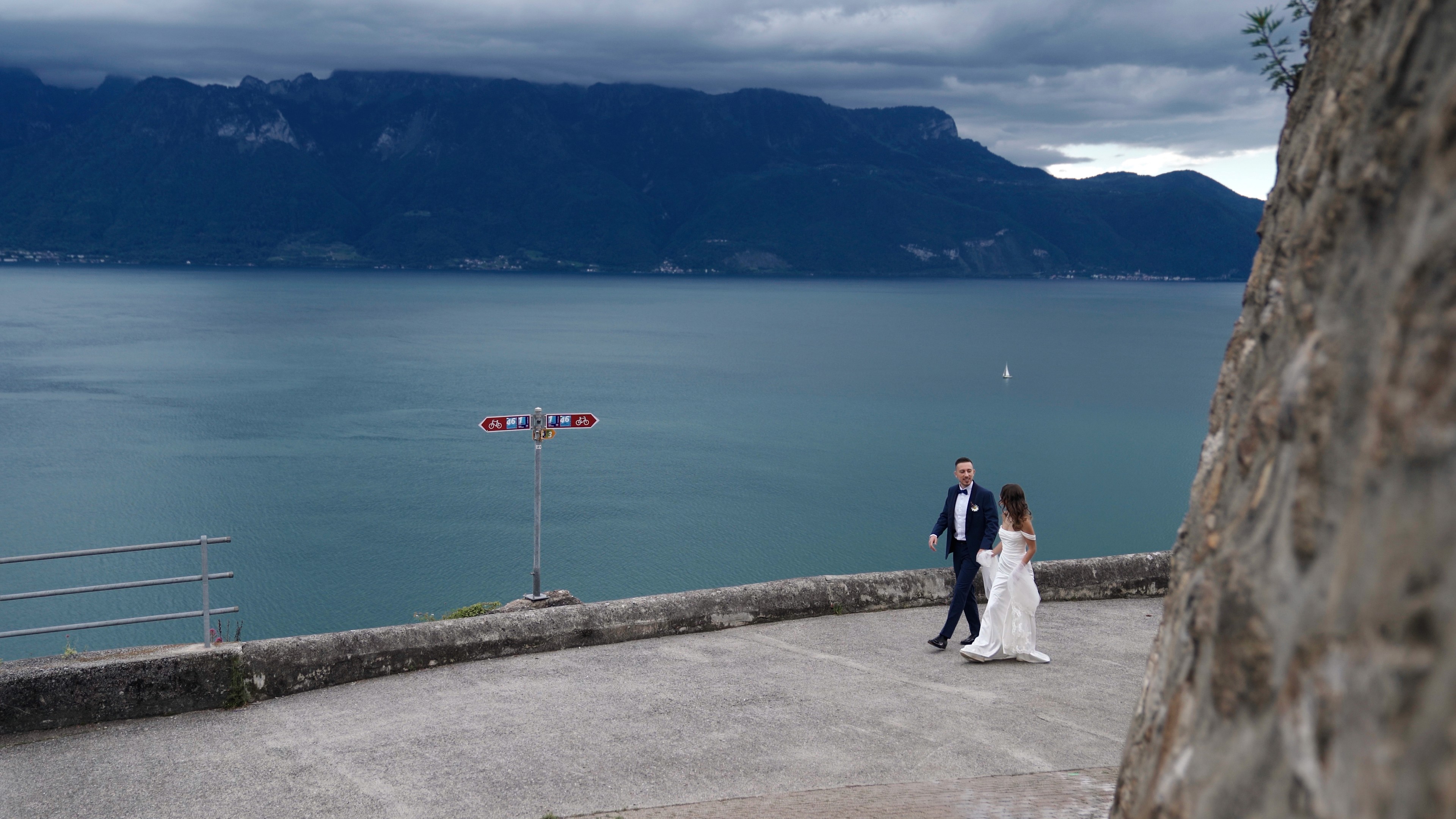
What a destination wedding videographer actually is
A destination wedding videographer is a crew that travels to your venue to film, wherever it is, rather than a local operator booked because they happen to live nearby. The distinction matters more than it sounds. When you hire a travelling studio, you are buying the specific eye whose full films you watched and loved. When you book a local stranger, you are buying proximity and hoping the result matches a few clips on a website.
For a wedding in Lake Como, the Amalfi Coast, Tuscany, Santorini, Provence or the Scottish Highlands, the crew typically flies in a day or two early — to scout the venue, understand how the light moves across the day, and be rested and on-site before the morning prep begins.
Travelling studio vs. local stranger
The biggest false economy in destination weddings is hiring locally to save on travel. Here is what you actually trade:
- Consistency of look. A travelling studio delivers the exact grade, pacing and storytelling style you saw in their portfolio. A local hire is a gamble — their best three clips may not represent a full film.
- Knowing your story. A crew that has worked with you through planning calls understands your family, your priorities, the moments that matter. A stranger meets you the morning of.
- Problem-solving under pressure. A studio that travels constantly has filmed in bad light, sudden rain, chaotic timelines and unfamiliar venues many times. That experience is invisible until something goes wrong — and at a destination wedding, something always does.
The honest case for local: it is cheaper, and for a very small, simple celebration it can be enough. For a wedding you have spent a year and a significant budget planning, the film is the only thing that outlives the day — and it is the wrong place to save a flight.
What changes for a destination film
A destination film is not just a local film in a prettier location. Several things shift:
The landscape is a character
Lake Como, a Highland glen, an Amalfi cliffside — the location is part of the story, not a backdrop. A good destination film gives the place room to breathe: wide establishing shots, golden-hour light on the water, the drive up to the venue. This is where drone work and careful scouting earn their place.
Multi-day coverage is common
Destination weddings are rarely a single day. Welcome dinners, rehearsal evenings, day-after brunches — the celebration often spans two to four days. That changes the film entirely: more coverage, more story, and usually a longer feature edit. It also changes the quote, so confirm exactly which events are covered.
Logistics become part of the craft
Travel, equipment shipping, local permits (drone rules vary by country), and accommodation all sit behind the scenes. A studio that travels professionally has this handled; it should not become your problem in the final week.
How destination pricing works
Travel and accommodation are typically billed in one of two ways:
- Flat destination fee — a single line item covering flights, accommodation and transfers, quoted up front. Easiest to budget against.
- At cost — actual flights and hotels passed through, sometimes with a per-night rate.
Either is fine — what matters is that it is stated clearly before you compare quotes. A quote that is silent on travel is hiding its real cost. The wedding-film production itself (coverage, shooters, edit) is priced separately from travel; for how that base cost is built, see the cost guide. These are general industry norms, not a quote — final pricing depends on location, length and deliverables; current packages are on the pricing page.
Questions to ask a destination videographer
- Have you filmed at this venue, or one like it, before?
- Do you travel a day early to scout, and is that time billed?
- How are travel and accommodation charged — flat fee or at cost?
- Which events are covered — just the wedding day, or welcome dinner and brunch too?
- Do you handle your own drone permits for this country?
- Is the crew I am hiring the one whose films I watched?
Where to go next
See full destination films — not teasers — from real European weddings in the portfolio, read the cost guide for how the budget is built, and check the pricing page for current package details.
Frequently asked
- What is a destination wedding videographer?
- A destination wedding videographer is a film crew that travels to your venue — such as Lake Como, the Amalfi Coast, Santorini or the Scottish Highlands — rather than a local operator booked for proximity. A travelling studio usually arrives a day or two early to scout the light and is on-site before morning prep, delivering the same look and storytelling you saw in their portfolio.
- Is it better to hire a travelling videographer or a local one?
- For a wedding you have planned for a year, a travelling studio is usually worth the flight. You get the exact look you fell in love with, a crew that knows your story from planning calls, and experience solving the problems destination weddings throw up. A local hire is cheaper and can be enough for a small, simple celebration, but the film is the one thing that outlives the day.
- How much extra does a destination wedding videographer cost?
- Travel and accommodation are billed either as a flat destination fee covering flights, hotels and transfers, or at cost. The wedding-film production itself is priced separately from travel. What matters most is that travel is stated clearly up front — a quote that is silent on travel is hiding its real cost. See the pricing page for current package details.
- Do destination wedding films cover more than one day?
- Often yes. Destination weddings frequently span two to four days — welcome dinner, rehearsal evening, the wedding day and a day-after brunch. This means more coverage and usually a longer feature edit than a single-day local wedding, so always confirm exactly which events are included in the quote.
- What should I ask a destination wedding videographer?
- Ask whether they have filmed at your venue or one like it, whether they travel a day early to scout, how travel and accommodation are charged, which events are covered, whether they handle their own drone permits for that country, and whether the crew you are hiring is the same one whose films you watched.