
How to Choose a Wedding Videographer: A Couple’s Guide to Getting It Right
Choosing a wedding videographer comes down to four things, in this order: watch at least one full film start to finish (not a 30-second teaser), confirm who actually shoots and edits your day, listen to how they capture audio, and check they have filmed your type of wedding before. The portfolio tells you whether their taste matches yours; the contract tells you whether the person whose work you fell in love with is the person who shows up. Price matters, but it is the last filter, not the first — the cheapest and most expensive quotes can both be wrong for you. This guide walks through how to read a portfolio like a professional, the six questions that reveal more than any sales call, and the warning signs that a beautiful Instagram grid can hide.
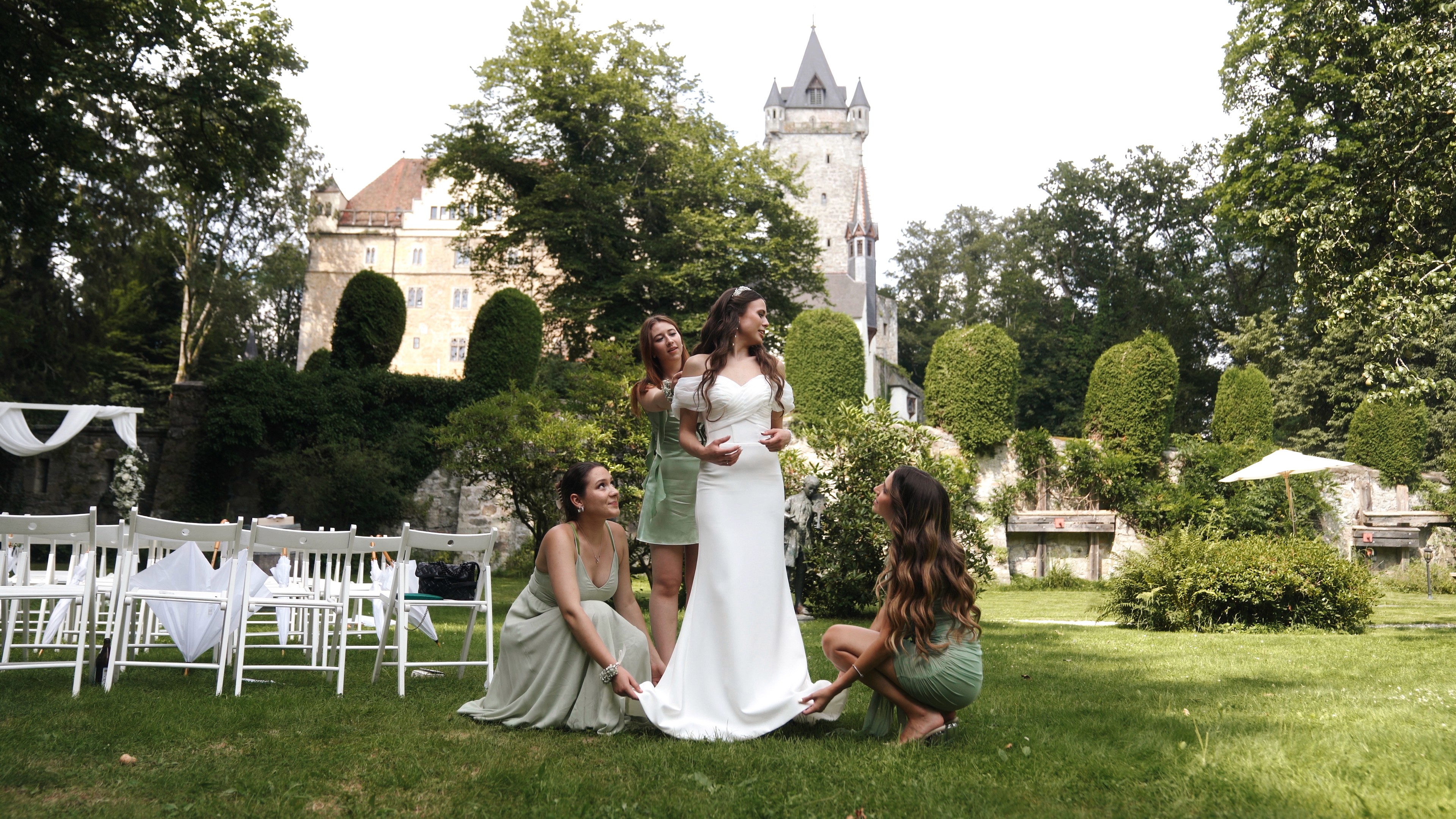
Start with one full film, not the highlight reel
Every videographer’s Instagram looks good — that is what Instagram is for. A 30-second teaser cut to a trending song tells you almost nothing about whether they can hold a story for eight minutes. Before anything else, ask to watch one complete film, start to finish: a full highlight film, ideally a feature edit too.
Watch for the things a teaser hides. Does the audio sound clean, or is it buried under music because the vows weren’t captured properly? Does the colour look consistent from the church to the reception, or does skin tone shift every cut? Does the story breathe — quiet moments, real reactions — or is it a relentless montage? A film you would actually re-watch on your anniversary has pacing. A reel does not.
Match taste before you compare price
There is no objectively “best” wedding film — there is the one that matches how you want your day to feel. Some couples want bright, editorial, fashion-led films. Others want dark, moody, documentary-led storytelling. A studio that is brilliant at one is often deliberately not doing the other.
Before you shortlist on price, shortlist on taste. Find three to five videographers whose full films move you, then compare those. Comparing a documentary specialist against a bright-and-airy specialist on price alone is comparing two different products.
The four things that actually decide quality
- Who shoots and who edits. At many studios the person whose reel you loved is a brand, not the operator who turns up. Confirm in writing that the cinematographer and editor you are hiring are the ones whose work you watched.
- How audio is captured. Vows and speeches are the emotional core of the film. Ask specifically: lav mics on the couple and officiant, plus a recorder on the sound desk — or on-camera mics only? On-camera audio in a windy clifftop ceremony loses the words you cried over.
- Second shooter for the ceremony. One operator can hold the couple or catch the mother’s tears — not both. A second camera is the single biggest jump from “recorded” to “cinematic.”
- Relevant experience. A videographer who has filmed a marquee in the rain, a 300-guest Indian wedding, or a multi-day Lake Como celebration has solved the problems yours will throw up. Ask to see a film from a wedding like yours.
Six questions that reveal more than a sales call
Put these to every studio on your shortlist:
- Will you personally shoot and edit our film, or is it sub-contracted?
- How is audio captured for the vows and speeches?
- How many shooters, for how many hours?
- What exactly do we receive, and when — highlight, feature, raw?
- How many revision rounds are included?
- For a destination wedding: are travel and accommodation included or billed separately?
A studio that answers all six clearly is one that has nothing to hide. Vague answers on audio (#2) and travel (#6) are the most common way a quote hides its real cost.
Red flags behind a beautiful grid
- Only teasers, never a full film. The most common tell. A great teaser over a weak feature edit means the story falls apart at length.
- No mention of audio anywhere. If the website never talks about sound, sound is not a priority — and it is the first thing budget filming drops.
- Stock-music-only films with no real ambient sound. A film with no laughter, no clinking glasses, no birds — just a song — is footage, not a film.
- A reel stitched from twenty different weddings. Impressive, but you never see whether they can carry one day from morning to last dance.
- Pressure to book today for a “one-time” discount. Good studios are busy; they don’t need to rush you.
Why “luxury” is about consistency, not gear
The word “luxury” gets attached to anyone with a cinema camera. What actually separates a luxury wedding film is consistency under pressure: the same eye that edited the trailer you loved standing in your room at 6am, the same hands grading every frame, the same team that has solved bad light, long days and chaotic timelines before. A studio that travels to shoot across Europe — rather than booking a local stranger for your date — is selling you that consistency. That, not the camera body, is what you are paying for.
Where to go next
See what full destination films actually look like in the portfolio, then read the cost guide to understand what drives the budget and the pricing page for current package details.
Frequently asked
- How do I choose a wedding videographer?
- Watch at least one full film start to finish before judging on price — a 30-second teaser hides weak audio, inconsistent colour and poor pacing. Then confirm who actually shoots and edits your day, ask how vows and speeches are recorded, and check they have filmed a wedding like yours. Match their taste to how you want your day to feel first; price is the final filter, not the first.
- What questions should I ask a wedding videographer before booking?
- Ask six things: will you personally shoot and edit our film or is it sub-contracted; how is audio captured for vows and speeches; how many shooters and hours; what exactly do we receive and when; how many revision rounds; and for a destination wedding, are travel and accommodation included. Clear answers on audio and travel are the strongest sign a quote is honest.
- What makes a wedding videographer “luxury”?
- Luxury is consistency, not gear. It means the same cinematographer and editor whose work you fell in love with are the ones who film and grade your day, that the team has solved difficult light and chaotic timelines before, and that a destination studio travels to you rather than sub-contracting a local stranger. The camera body matters far less than the eye and hands behind it.
- Should I pick a videographer based on their Instagram?
- Use Instagram to find videographers whose taste you like, but never book on a teaser alone. A 30-second reel cut to a trending song tells you nothing about whether they can carry a full eight-minute story, capture clean vow audio, or hold consistent colour across a whole day. Always ask to watch a complete film before booking.
- What are the red flags when choosing a wedding videographer?
- The biggest red flags are: only ever showing teasers and never a full film; no mention of how audio is captured anywhere on their site; films with stock music but no real ambient sound; a reel stitched from many different weddings so you never see one day told end to end; and pressure to book immediately for a one-time discount.