
Wedding Videography Packages Explained: What’s Actually Inside Each Tier
Wedding videography packages are usually built from the same building blocks — hours of coverage, number of shooters, which films you receive, how audio is captured, and delivery timeline — bundled into named tiers. The tier name (“Essential”, “Signature”, “Luxury”) means nothing on its own; what matters is the components inside. A mid tier typically means two shooters, 10–12 hours, a highlight film plus a longer feature edit, and proper audio capture. The cheapest tier almost always cuts the second shooter and professional audio first. This guide breaks down each component, explains which add-ons are worth it (clean vow audio, second shooter) and which rarely get watched (raw footage), and shows how to compare two packages that look different on paper but cover the same day.
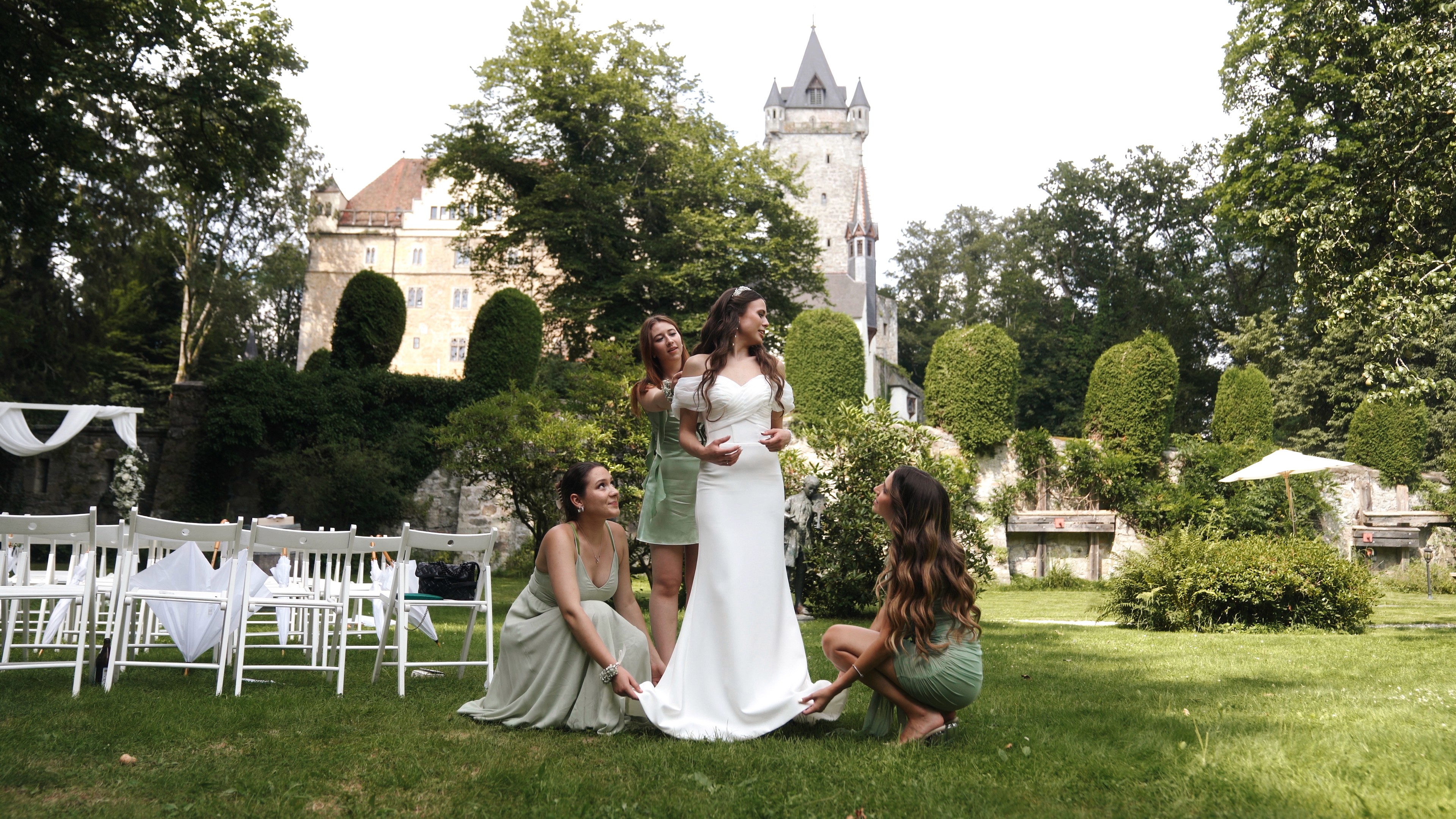
Tier names are marketing — components are the package
“Essential”, “Signature”, “Luxury”, “Platinum” — these labels tell you nothing. Two studios can both sell a “Signature” package that differs by thousands and by an entire second camera. Ignore the name. A wedding videography package is only ever the sum of five components:
- Hours of coverage
- Number of shooters
- Which films you receive
- How audio is captured
- Delivery timeline and revisions
Read every package as those five lines and the comparison becomes simple.
The five components, decoded
1. Hours of coverage
A full day — getting ready to first dance — is typically 10–12 hours. Cheaper tiers cut hours: ceremony plus a few hours after. That saves money but loses the morning nerves, the letters, the quiet moments before everyone arrives. Check the start and end time, not just a number.
2. Number of shooters
The biggest quality lever. One shooter cannot hold the couple and catch the parents’ reaction at the same time. Two shooters give you the cut between them — which is what makes a film feel cinematic. Most mid and luxury tiers include two; the entry tier usually does not.
3. Which films you receive
This is where packages diverge most:
- Highlight film (3–6 min): the trailer of your day. Almost always included.
- Feature / full-length film (15–40 min): the day told properly, vows and speeches in full.
- Documentary edit: longer, less music-driven.
- Same-day edit: cut during the wedding, screened that night — premium add-on.
- Raw footage: every clip, ungraded. Cheap to add, rarely watched.
A common trap: a cheap tier includes only a highlight, so the full vows and speeches you wanted are an expensive upgrade.
4. How audio is captured
Often buried or omitted. Lav mics on the couple and officiant plus a recorder on the sound desk is what gives you clean vows. On-camera audio only means wind and room noise. If a package does not mention audio, ask — it is the first corner cut.
5. Delivery timeline and revisions
Editing a wedding film is one to three weeks of work per film, so delivery in 6–12 weeks is normal; same-day-edit excepted. Check how many revision rounds are included — one or two is standard, and it matters if the first cut is not quite right.
What to add, what to skip
- Worth it: a second shooter, professional vow/speech audio, a feature edit if you want the speeches in full. These are the things you cannot recreate later.
- Situational: same-day edit (great for big receptions), drone (great for destination landscapes).
- Usually skip: raw footage unless you have a specific reason — it is large, ungraded, and rarely watched.
How to compare two packages fairly
Put them side by side and rewrite both as the five components above. Then ask:
- Same hours? Same start/end time?
- One shooter or two?
- Highlight only, or highlight plus feature?
- Lav-mic audio or on-camera?
- Same delivery time and revision count?
Once both quotes are reduced to components, the “expensive” one is often simply including the second shooter and feature edit the “cheap” one charges extra for. For how these components build into a total, see the cost guide. These are general industry norms — current package details are on the pricing page, and for combined photo-and-video bundles see the photo + video packages guide.
Where to go next
Compare full films to see what each tier delivers in the portfolio, read the cost guide, and check current packages on the pricing page.
Frequently asked
- What is included in a wedding videography package?
- A wedding videography package is built from five components: hours of coverage, number of shooters, which films you receive (highlight, feature, documentary, same-day edit, raw), how audio is captured, and the delivery timeline with revisions. Tier names like Essential or Luxury mean nothing on their own — what matters is the components inside, so read every package as those five lines.
- What does a mid-tier wedding videography package usually include?
- A typical mid tier includes two shooters, around 10–12 hours of coverage, a highlight film plus a longer feature edit, and professional audio capture with lav mics on the couple and officiant. The cheapest tier usually drops the second shooter and professional audio first, and often includes only a highlight film with the full vows and speeches as a paid upgrade.
- Which wedding video add-ons are worth paying for?
- The add-ons worth paying for are a second shooter, professional vow and speech audio, and a feature edit if you want speeches in full — these cannot be recreated after the day. A same-day edit suits large receptions and drone work suits destination landscapes. Raw footage is usually skippable: it is large, ungraded and rarely watched.
- How long does it take to receive a wedding film?
- Because editing a single wedding film is one to three weeks of work, delivery within roughly 6–12 weeks is normal, with a same-day edit being the exception since it is cut on the day. Always check how many revision rounds are included — one or two is standard, and it matters if the first cut is not quite right.
- How do I compare two wedding videography packages?
- Rewrite both packages as the same five components — hours, shooters, films received, audio capture, and delivery with revisions — and ignore the tier names. Often the more expensive quote is simply including the second shooter and feature edit that the cheaper one charges extra for, so reducing both to components reveals the true comparison.