
Journal · Tuscany
Wedding Videographer in Tuscany: Destination Films That Belong to the Place
Hiring a wedding videographer in Tuscany means bringing a destination crew that travels in, scouts the light, and knows the region’s venues. Tuscany is the warm counterpoint to the coastal destinations: the appeal is light and texture, not spectacle. The region rewards a documentary-leaning film that lets the landscape and the slow pace of a countryside celebration breathe, rather than a fast cinematic montage. This guide covers what makes Tuscany work on film, the venues worth filming around, when to plan for the best light, and how destination pricing works — with all market ranges framed as general industry context, not a quote.
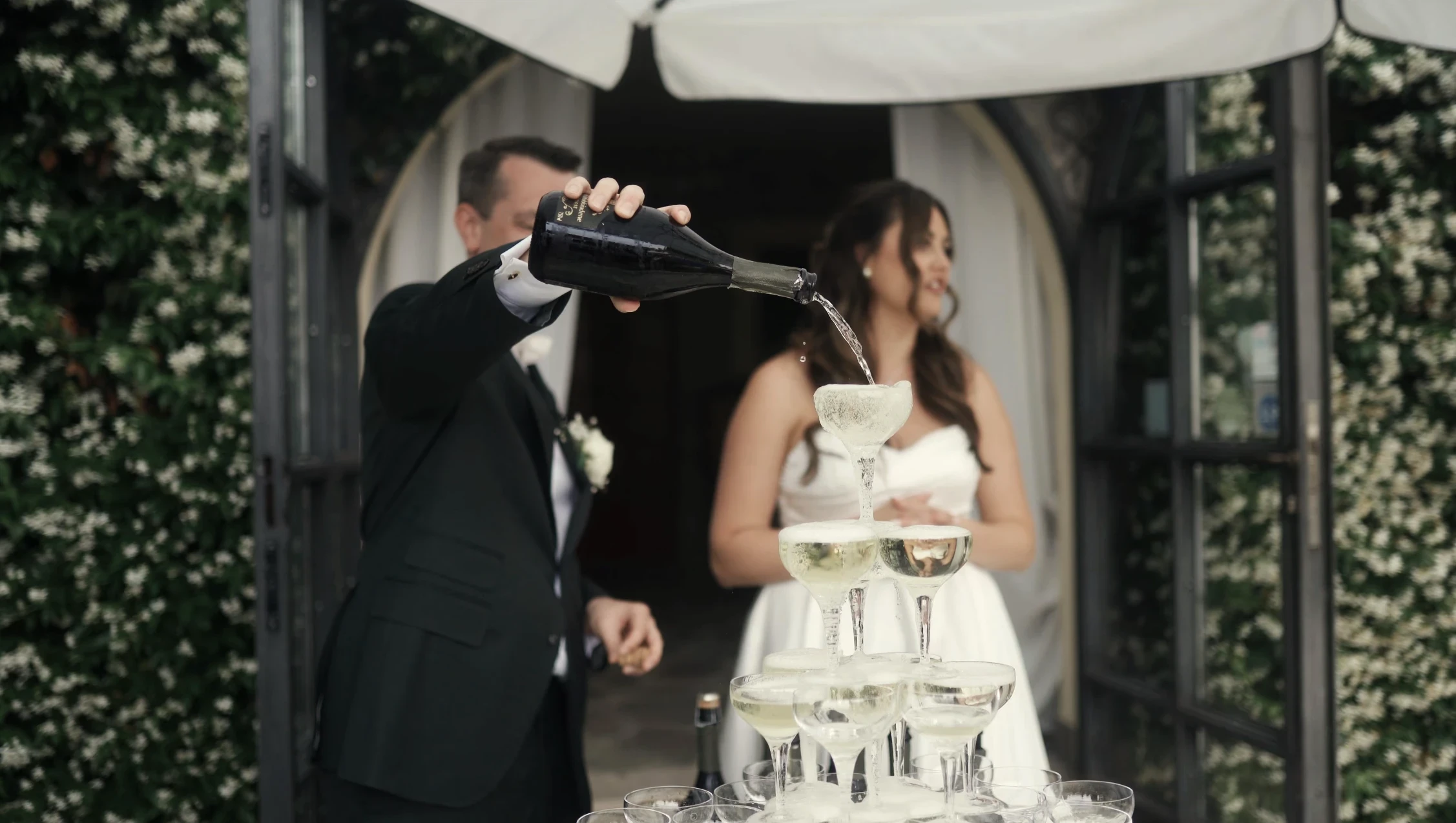
Filming a wedding in Tuscany
Tuscany is the warm counterpoint to the coastal destinations: the appeal is light and texture, not spectacle. The region rewards a documentary-leaning film that lets the landscape and the slow pace of a countryside celebration breathe, rather than a fast cinematic montage.
A wedding videographer working in Tuscany is, in practice, a destination crew that travels in — arriving a day or two early to scout the venue and understand how the light moves across the day. Whether you bring a studio whose full films you already love or hire a local stranger is the single biggest decision; for a celebration in a place like this, the film is the one thing that outlives the day.
What makes Tuscany work on film
The backdrop here is rolling cypress hills, stone farmhouses and walled villa gardens, and the warm terracotta palette that defines a Tuscan film. The location is a character in the film, not just a setting — which is where careful scouting, considered composition and (where it earns its place) drone work matter.
The light is the other half of the story: the famously soft, golden Tuscan light that flatters skin and landscape alike, especially in the hour after sunrise and before sunset. A film-friendly timeline is built around that light — scheduling portraits and any outdoor ceremony to avoid the harshest hours and to steal a few minutes at golden hour.
Venues we love filming around Tuscany
Tuscany is home to venues built for celebration, among them Villa Cora (Florence), Borgo Santo Pietro, Castello di Vincigliata, Villa Mangiacane. Each shoots differently — a cliffside terrace, a walled garden and a palazzo interior each demand a different approach to light and movement — which is why a crew that has filmed the region before is worth more than one seeing it for the first time on your wedding morning.
When to plan it
The strongest window is generally May, June, September and early October — high summer brings heat that shortens comfortable shooting windows. Beyond comfort and crowds, the season changes the light and therefore the film, so it is worth weighing the date against the look you want.
What this means for your film
Three things matter most for a Tuscany wedding film:
- A travelling studio over a local stranger — so the eye that edited the films you fell in love with is the one in the room. See how to choose a videographer.
- A second shooter and proper audio — the single biggest jumps in quality, and the first things a cheap quote cuts.
- Travel handled cleanly — flights, accommodation and any drone permits sorted by the studio, billed transparently as a flat fee or at cost.
What it costs
Across the European destination market, couples in 2026 commonly budget somewhere between about €2,500 for a single-shooter highlight film and €12,000+ for a multi-day, multi-camera production with a same-day edit. These are general industry ranges, not a quote — destination travel is billed separately and final pricing depends on scope. For how the budget is built, see the cost guide; current package details are on the pricing page.
Where to go next
See full destination films — not teasers — in the portfolio, read the destination guide and the cost guide, and check the pricing page.
Frequently asked
- How much does a wedding videographer in Tuscany cost?
- Across the European destination market, couples in 2026 commonly budget somewhere between about €2,500 for a single-shooter highlight film and €12,000+ for a multi-day, multi-camera production with a same-day edit. These are general industry ranges, not a quote — destination travel is billed separately and final pricing depends on scope. For a Tuscany wedding, travel and accommodation for the crew are billed on top of the film production — either as a flat destination fee or at cost. See the cost guide and pricing page for current package details.
- Should I hire a local videographer in Tuscany or bring one?
- For a destination wedding you have planned for a year, bringing a studio whose full films you already love is usually worth the travel. You get the exact look and storytelling you fell in love with and a team that knows your story from planning calls, rather than gambling on a local stranger whose best few clips may not represent a full film. A local hire is cheaper and can suffice for a very small, simple celebration.
- When is the best time to get married in Tuscany for the film?
- The strongest window is generally May, June, September and early October — high summer brings heat that shortens comfortable shooting windows. The season changes the quality of light and the size of the crowds, both of which affect the film, so it is worth weighing your date against the look you want as well as the weather.
- Do I need a drone for a Tuscany wedding film?
- Drone work earns its place where the landscape is part of the story, which is true of Tuscany — aerial shots establish the location in a way ground cameras cannot. Note that drone permits vary by country, so a destination studio should hold the relevant permissions and handle them for you rather than leaving it as your problem.